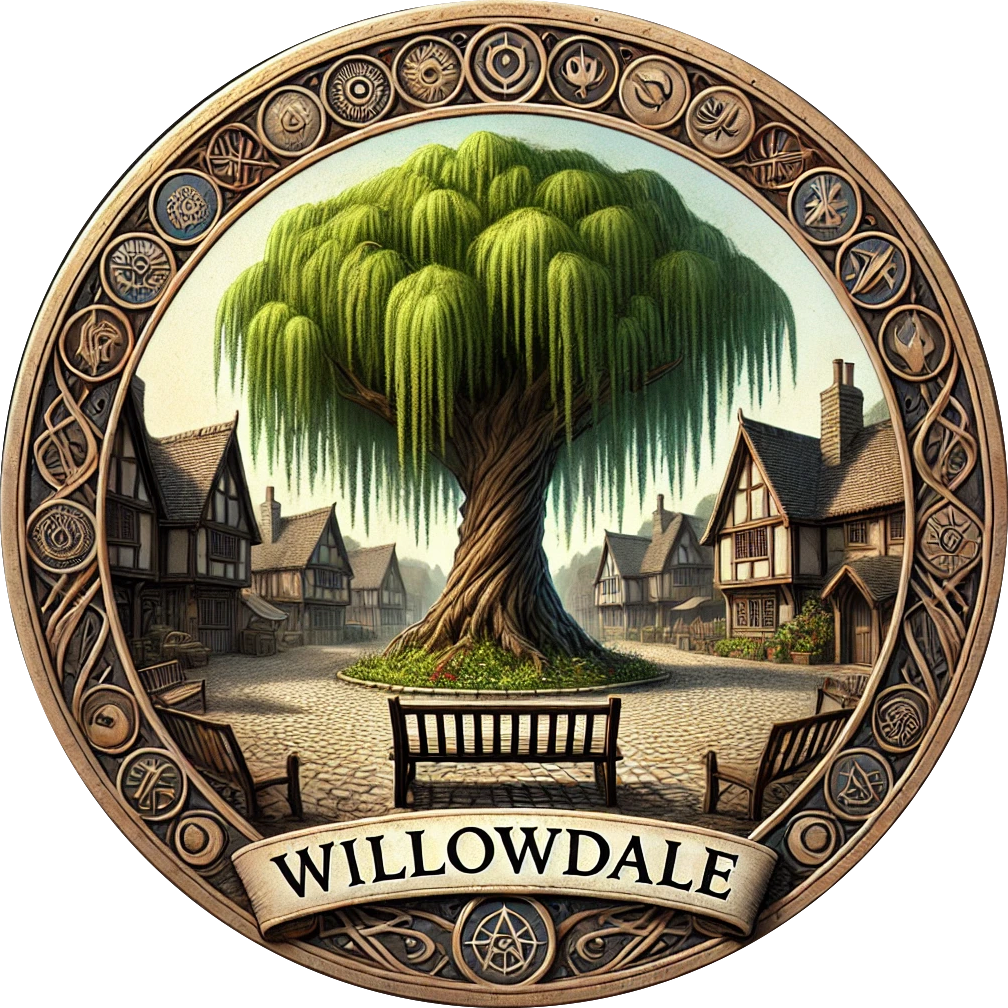
The first decade after the Withering was a time of counting what remained. The answer was less than anyone hoped and more than anyone feared.
The inner Heartgrove Willows stood firm. Tathann, the Great Willow, had not faltered. The settlements closest to the ancient groves had survived intact, though swollen with refugees from the frontier. The Galadwen, exhausted from decades of holding the boundary, reported that the wild spirits had settled into their new territories and were no longer actively pressing inward. The new equilibrium held.
But the world had shrunk. Roads that had once connected dozens of settlements now ended abruptly at walls of forest and stone. Trade networks that had taken a century to build were gone. The Thalrun who had escaped their outer halls brought knowledge and skill but had lost their workshops, their forges, their libraries of stone-carved records. The Aellonir who had fled the volcanic lands carried their craft in their hands and their memories, but the tools and materials they needed were buried under cooling lava flows or locked in territories too dangerous to enter.
The mortal races pulled inward and focused on surviving. Fields were replanted. Houses were repaired. The basic functions of civilization, feeding people, keeping them warm, maintaining order, consumed all available energy. There was no talk of expansion. The frontier was a wound too fresh to examine.
The Galadwen tended the willows with renewed devotion. Every Heartgrove that survived was treated as sacred, which it always had been, but the Withering had stripped away the complacency that prosperity had bred. No one argued anymore about whether the willows were a gift or a constraint. The willows were the reason anyone was alive.
By the twentieth Turning of the New Growth, the mortal races had stabilized enough to look outward again, not with the ambition of the Spreading Boughs but with caution and an awareness of consequence that the old frontier builders had lacked.
The first expeditions into the lost lands were small and careful. Scouts traveled the old roads as far as they could, mapping what had changed and what still stood. They found ruins everywhere. Grand structures from the Spreading Boughs, reclaimed by forest and vine, their stone still sound but their purposes forgotten. Roads that ended at rivers that had not been there before. Mountain passes blocked by rockfalls that seemed deliberate. The wild spirits did not prevent these scouts from entering their territory, but they made no effort to welcome them either.
Some of what the scouts found was troubling. In places where the Withering had been most intense, the land itself had changed in ways that went beyond simple overgrowth. Trees grew in patterns too regular to be natural. Stones arranged themselves in formations that suggested intelligence, and water pooled in shapes that echoed the old rites the shamans had once performed. The spirit world had done more than reclaim this land. It had begun to reshape it according to its own design.
And in a few places, the scouts found people.
These were not the descendants of those who had fled during the Withering, but of those who had stayed. The ones who had chosen the wild spirits over the willows, three or four generations ago. They lived at the edges of the spirit-held territories in small, scattered groups. They were not hostile, but they were changed. They spoke in ways that mixed mortal language with sounds that had no mortal origin, and wore marks on their skin that pulsed faintly with light. They were uncomfortable in the presence of willow cuttings and did not approach the groves.
The scouts did not know what to make of them. The village councils debated for years. These were still mortal people, descended from Elunari, Aellonir, Thalrun, and others who had been part of mortal civilization within living ancestral memory. But they had been shaped by the wild spirits, and the willows did not recognize them as their own.
They became known as the Untethered. The mortal settlements watched them warily, traded with them occasionally, and tried not to think too hard about what their existence implied.
The Valenra appeared around Turning 312, roughly a decade after the first scouts had pushed back into the wild lands. The timing has never been satisfactorily explained.
It began simply enough. An Elunari child in a small Heartgrove village began to see things that others could not: lights at the edges of vision, shapes in the willow leaves that resolved into faces and then vanished. The child heard whispers from the Aether that were not the ancestral voices the shamans communed with but something else, something that seemed to be speaking directly to her.
The village shaman examined the child and found something unprecedented: a thread of the Aether woven into her being, as integral as bone or blood. It was not a spiritual gift that could be taught or developed but a fundamental part of what she was. The shaman had no framework for understanding it. Neither did anyone else.
Within a few Turnings, other Valenra appeared. Always born among the Elunari, always manifesting in childhood, always carrying that same thread of the Aether that no shaman could explain. Some could sense spirits with a clarity that surpassed the most experienced Galadwen druids. Others could touch the elements in small ways, coaxing a flame brighter or calming a choppy stream. A few could do things that had no precedent at all, glimpsing threads of possibility in the Aether, sensing the emotional residue of events long past, feeling the presence of spirit vessels hidden in the earth.
The Galadwen were the first to notice the most important detail: the willows recognized the Valenra, not as ordinary Elunari but as something more. When a Valenra walked beneath a Heartgrove, the branches stirred. The leaves whispered. The protective aura that sheltered all mortals seemed to sharpen and focus around them, as though the willow was acknowledging a kinship that went deeper than the bond it shared with other mortal races.
No one could explain it. Scholars debated whether the Valenra were a gift from Caedhriel, a natural response to the Withering, or something else entirely. Some feared they were an echo of the same blending of spirit and mortal that had produced the Untethered, the frontier people who had chosen the wild spirits. But the Valenra were different. The Untethered had been changed by exposure to the wild. The Valenra were born with their gift. Whatever they were, the world had made them deliberately.
And they were restless.
The Elunari are a settled people. They find contentment in their villages, their fields, their families. The Valenra, born among them, do not. From their earliest years, the Valenra feel a pull toward the edges of the known world. They are drawn to the old roads that lead into the spirit-held territories, to the ruins of the Spreading Boughs, to the places where the boundary between the physical world and the Aether is thinnest. They can feel the Aether calling to them, and the call is not something they can ignore any more than a Sulhenni can ignore the wind.
The first generation of Valenra frightened their families. These were Elunari parents watching their children stare into the willow groves for hours, speaking to things only they could see, and watching them pack supplies at fourteen and walk toward the forest with a certainty that no argument could shake. Some parents tried to stop them. It never worked for long. The Valenra were polite about it, usually. They loved their families. But they left.
They came back, too. That was the part that eventually eased the villages’ fear. The Valenra went into the wild lands, explored the ruins, encountered spirits both benign and hostile, and returned with stories, artifacts, and knowledge that the mortal settlements desperately needed. They mapped safe routes through territories that had been impassable since the Withering, recovered lost techniques from Spreading Boughs libraries that the frontier refugees had been forced to abandon, and established contact with spirits that had not spoken to mortals in generations.
By Turning 330 or so, the Valenra had earned a place in mortal society that was complicated but secure. They were heroes, certainly. The villages celebrated them when they returned and mourned them when they did not. But they were also unsettling. Their connection to the Aether set them apart from the people they had been born among, and even the warmest welcome carried an undertone of wariness.
The question that no one asked aloud, because asking it would mean confronting uncomfortable possibilities, was this: if the Valenra carried a thread of the Aether in their blood, and the Untethered carried the mark of the wild spirits on their skin, what was the actual difference between them? One had been born with the gift. The other had chosen it. But both stood at the boundary between the mortal world and the spirit world. Both were bridges, and a bridge can be crossed from either direction.
The game begins at Turning 347, forty-seven Turnings into the New Growth. The world is not what it was during the Spreading Boughs, and it will never be again. But it is alive, and it is growing.
The Heartgrove villages are strong. Trade has resumed between the settlements that survived the Withering, though the routes are shorter and more dangerous than the old highways. The Thalrun have reopened some of their inner halls. The Myrralyn have found new rivers to call home. The Aellonir are rebuilding their forges in safer lands, working with less volcanic fire but with a humility their ancestors would not have recognized. The Sulhenni wander again, though they travel with more care and less certainty than before.
The Galadwen tend the willows and watch the boundaries. The Elunari keep the world fed and functioning. The Valenra explore, pushing into the wild lands one ruin, one spirit encounter, one recovered artifact at a time.
Beyond the willow groves, the spirit-held territories stretch to the horizon. They are beautiful and dangerous, full of the remnants of the Spreading Boughs and the strange new shapes the wild spirits have built from them. The ruins wait to be explored. The spirits will have to be understood, or avoided, or confronted. The old roads could be reopened, if mortals can find the wisdom to do it without repeating the mistakes that led to the Withering.
And somewhere out there, at the edges of the maps, the Untethered watch the mortal settlements with eyes that carry a different kind of light. They have their own relationship with the spirits, their own understanding of the Aether, their own answers to questions the mortal races have not yet learned to ask.
The world is smaller than it was, and far less of it is understood.
This is where you come in.